Chosen theme: Tips for Photographing Wildlife on Hikes. Lace up your boots, shoulder your camera, and step into a living gallery where each footfall might reveal a shy fox, a curious jay, or a fleeting moment of wild grace. Subscribe, comment, and join our trail-wise photo community.
Reading the Trail: Behavior and Habitat
Golden Hours on the Move
Dawn and dusk are the wildlife commute. Watch meadow edges and water crossings where animals transition between resting and feeding. Share your favorite golden-hour sighting in the comments and tell us how the light shaped your composition and exposure choices.
Wild noses are remarkable. Hike with the wind in your face when possible, shorten your stride, and soften footfall on leaf litter. A quiet approach preserves behavior, builds trust, and yields images that feel honest rather than startled or staged.
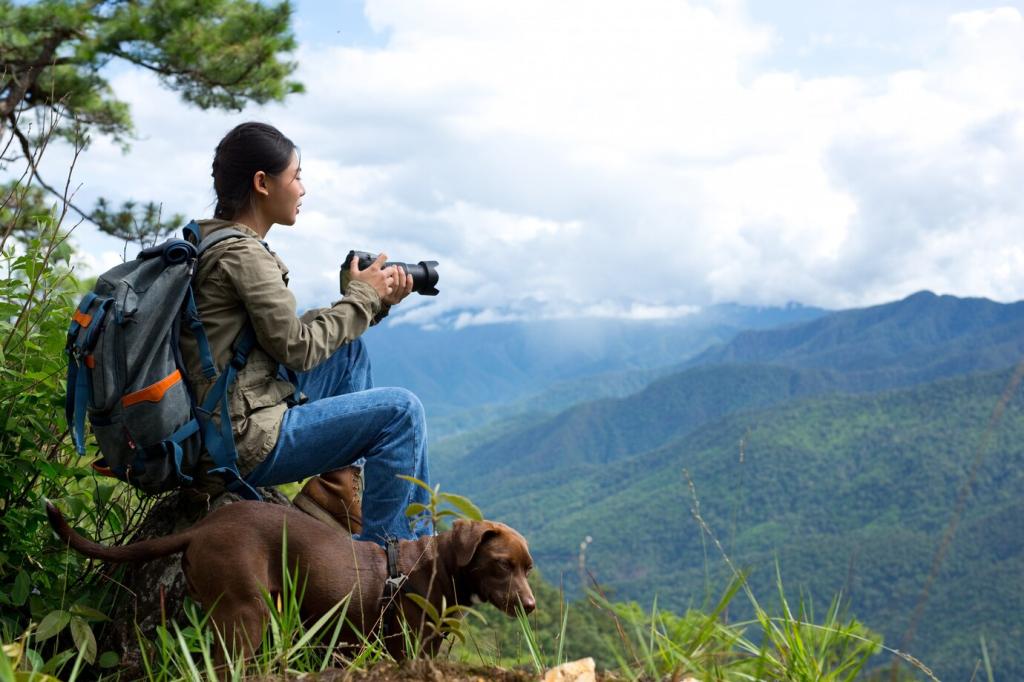
Use long lenses to keep a respectful buffer. Animals show subtle stress signals before fleeing; if you see them, you are too close. Let moments unfold naturally, and you will capture tender gestures impossible under pressure or intrusion.
A compact 70–200mm with a 1.4x teleconverter or a modern 100–400mm gives flexible reach for birds, deer, and quiet portraits. If you carry one lens, choose the sharpest zoom you will actually hike with all day.
Start around 1/1000s for birds and small mammals, faster for wings and leaps. Use Auto ISO with a reasonable ceiling. If light falls, open your aperture before sacrificing speed, and embrace a little grain to keep motion tack sharp.
AI Servo or AF-C with subject tracking keeps focus locked during erratic movement. Use expanded points or a small zone on the eye or head. Practice on dogs at the park to build muscle memory before your next mountain trail.
Backlit fur and white plumage easily blow out. Dial negative exposure compensation in bright scenes, and watch the histogram rather than the rear LCD. Shoot RAW for flexibility, then recover delicate highlights without dulling midtone detail.
Fieldcraft: Blend In, See More
Become a Patient Landmark
Pick a promising perch near sign, sit low, and wait. After a few still minutes, birds return, squirrels resume, and your heartbeat slows. I once watched a red fox yawn and curl beside a stump because I simply stayed put.
Ridges, boulders, and brush breaks hide your silhouette. Approach diagonally rather than straight on, and pause behind cover to scan. When you peek, do it slowly, camera ready, and you will frame before your subject notices movement.
Ditch jangling zippers, crinkly fabrics, and swinging straps. Choose muted colors that match your environment, not camouflage that violates park guidelines. Wrap tape around metal buckles, and stow loose items so curiosity, not clatter, defines your presence.
Never bait, call, or harass animals for a shot. Stay on durable surfaces, obey closures during nesting or denning, and give parents extra space. Ethical decisions today protect tomorrow’s encounters and the stories you will proudly share.
Frame through ferns, branches, or trail curves to create depth and context. A softly blurred foreground whispers where you were, while the subject remains crisp. These choices transform a record shot into a remembered experience worth revisiting.
02
Eye-Level Empathy
Lower yourself to the animal’s height to invite connection. Knees muddy, elbows anchored, your lens meets a gaze rather than looking down from a human perch. The result feels respectful, intimate, and undeniably alive on the page.
03
Light as Narrative
Side light sculpts fur; backlight halos whiskers and breath on cold mornings. Use negative space where the animal looks, and let shadows carry tension. Share your favorite lighting trick with subscribers and inspire someone’s next sunrise wander.
Weather, Light, and Fast Decisions
When mist drifts through evergreens, slow down. Expose for highlights, watch micro-contrast, and embrace simplified shapes. Animals appear as silhouettes, inviting minimal compositions that feel timeless. Post your best foggy frame and tell us how you metered it.
Weather, Light, and Fast Decisions
Seek dappled shade, shoot toward clean backgrounds, and expose for the face. Use a polarizer only if it truly helps. Midday sessions become scouting walks that log behavior, then pay off beautifully when evening light returns.
After the Shot: Notes, Maps, and Community
Keep a Field Log
Record species, behavior, weather, and time in a pocket notebook or voice memo. Patterns emerge quickly, guiding smarter departures next week. Your future self will thank you when that elusive woodpecker appears exactly where your notes predicted.
Geotag With Care
Protect sensitive habitats by stripping exact coordinates before posting. Mention region and habitat type instead. Responsible sharing preserves fragile locations while still educating others. Join our newsletter for monthly discussions on ethical communication practices.
Share, Learn, and Encourage
Post a favorite hiking wildlife photo and the story behind it. Ask for constructive feedback, offer a tip, and welcome beginners. Community strengthens fieldcraft, and your insight might spark someone’s first respectful, life-changing encounter on a quiet trail.